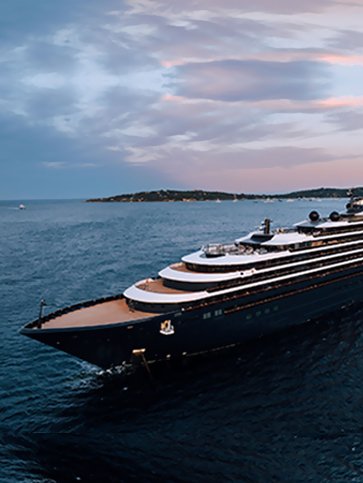
The most persuasive argument for a small ship is often felt before it is noticed. There is no crowd gathering around a lift, no long walk back to a suite and no need to plan the day around thousands of other guests. The atmosphere is quieter, the service becomes personal more quickly, and the sea remains part of the experience rather than a distant backdrop.
“Small ship” is not a regulated category, however, and it describes a surprisingly broad range of vessels. SeaDream’s two yachts accommodate no more than 112 guests each. Windstar’s fleet spans intimate sailing yachts and all-suite motor yachts carrying between 148 and 342 guests. Silversea offers everything from a 100-guest Galápagos ship to larger classic vessels with the restaurants, lounges and wellness facilities of a sophisticated resort.
The right size therefore depends on what you want from the journey.
Begin with the destination
In regions shaped by small harbours, shallow bays or limited infrastructure, the vessel can determine what you actually see. A yacht may anchor close to a secluded Caribbean beach, enter a compact Mediterranean port or support Zodiac landings in an expedition region. Larger luxury ships provide more dining and entertainment choices, but may rely more frequently on tenders or call at ports built to accommodate them.
This is why choosing a cruise by suite alone is a mistake. First choose the geography and the experiences that matter; then identify the ship able to deliver them well.
Decide how much structure you enjoy
Yacht-style cruising tends to be relaxed and lightly programmed. SeaDream and Windstar appeal to travellers who value open decks, an informal rhythm and the ability to slip into the water from a marina platform when conditions allow. A classic luxury line such as Regent Seven Seas or Crystal offers a fuller programme of restaurants, performances, lectures and organised shore experiences.
Expedition ships occupy another category. The luxury is still present, but the journey is led by conditions, wildlife and a specialist team. A scheduled landing may move because of weather; that flexibility is part of the experience rather than a flaw in it.
Look closely at what “all-inclusive” means
The phrase varies significantly between brands. Regent includes unlimited shore excursions, specialty dining, beverages, gratuities and Wi-Fi in its standard offering. Crystal includes dining, selected beverages, gratuities, Wi-Fi and butler service in every accommodation category, although complimentary specialty-restaurant reservations are subject to an allotment based on voyage length. Windstar offers both cruise-only and packaged fare choices, while SeaDream includes its open bar and gratuities.
A proper comparison should include the experiences you are likely to add, not simply the advertised fare.
Practical details deserve equal attention. On a very small yacht, stabilisation, lift access, medical facilities and the number of sheltered public spaces may differ from those on a larger vessel. Families should confirm age requirements and children’s programming rather than assume that a small ship is adults-only or family-focused. Travellers who enjoy sea days should also consider whether the ship has enough variety when the destination temporarily recedes. These questions are not glamorous, but they determine whether intimacy feels liberating or limiting.
Choose the feeling, not the ranking
There is no universal “best” small ship. One traveller may want the polished formality of an all-suite vessel; another may prefer bare feet on deck after an afternoon swim. Some value a celebrated dining programme, while others care most about a naturalist who can interpret what lies beyond the bow.
The best choice is the ship whose scale, social atmosphere and daily rhythm feel natural to you. When those elements align, small-ship cruising offers a rare kind of luxury: less friction, more access and the freedom to experience a place without feeling processed through it.