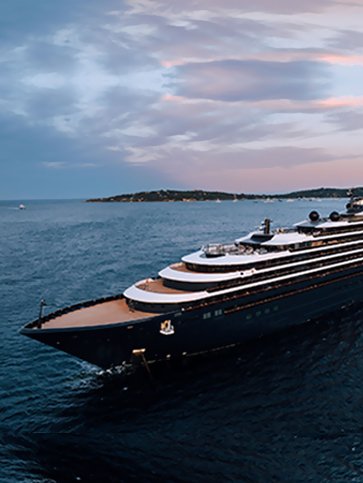
Food was once treated as a supporting feature of a cruise: plentiful, formal and largely disconnected from the places beyond the ship. The best luxury lines have moved well beyond that model. Dining is now one of the clearest expressions of a brand’s personality, and for some travellers it should influence the choice of ship as much as the suite or itinerary.
The question is not simply which line serves the “best” food. It is whether you want recognisable chef-led restaurants, menus that change with the region, a relaxed yacht atmosphere or the breadth of choice found in a floating resort.
Crystal: established restaurants and a sense of occasion
Crystal’s dining identity is built around variety and named venues. Umi Uma serves Japanese-Peruvian cuisine by chef Nobu Matsuhisa; Crystal describes it as the only Nobu restaurant at sea. Osteria d’Ovidio provides the Italian counterpoint, while the wider programme includes open-seating dining, casual options and 24-hour in-suite service.
Most dining is included, but the complimentary reservation allocation for Umi Uma and Osteria d’Ovidio varies by voyage length, with a charge for reservations beyond that allowance. This is the kind of detail worth understanding before sailing, especially for guests who plan their evenings around a favourite restaurant.
Silversea: tasting the destination
Silversea’s S.A.L.T.—Sea And Land Taste—programme treats cuisine as cultural interpretation. S.A.L.T. Kitchen changes menus according to the region, while S.A.L.T. Bar, S.A.L.T. Lab, selected shore experiences and a chef’s-table concept extend the idea beyond dinner.
This approach is best for travellers who want the food on board to remain connected to the journey. A menu in Greece should not feel identical to one in Peru. The programme is available on selected ships, so the specific vessel matters.

Yacht-style dining: fewer venues, greater ease
On a yacht, culinary luxury often comes from informality rather than the number of restaurants. SeaDream serves a maximum of 112 guests and includes meals, an open bar and gratuities. The scale encourages personalised service, and meals can feel closer to those on a private yacht than a conventional cruise ship.
Windstar combines small-ship travel with destination-inspired food and has a long-running culinary partnership with the James Beard Foundation. Its experience is more relaxed, with open dining and deck-based options that suit travellers who do not want every excellent meal to become an event requiring formal preparation.
What to compare before choosing
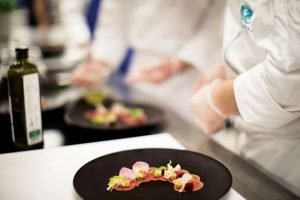
Count restaurants only after asking better questions. Are specialty venues included? How frequently can they be reserved? Does the ship offer genuine outdoor dining? Can the culinary programme accommodate allergies or highly specific dietary needs? Is room service available around the clock, and can dishes from main restaurants be served in-suite?
It is also worth separating brand partnerships from Michelin stars. Michelin awards restaurants in specific locations; it does not award an entire cruise line. A celebrated chef’s involvement can be meaningful, but execution, sourcing and consistency remain the true test.
Wine deserves its own review. An included list may be perfectly enjoyable, while a serious collector may care more about cellar depth, corkage rules, reserve pricing and the sommelier team. Culinary shore experiences also vary from large demonstrations to genuinely small market visits and private meals. If food is the purpose of the voyage, confirm these elements on the exact ship rather than relying on a fleet-wide description.
The right culinary ship is the one that matches how you like to eat. Some travellers want a polished dining room and a familiar table each evening. Others want regional dishes after a market visit, sushi at the counter or lunch served outside while the coastline moves past. At sea, the most convincing luxury is not excess. It is having the right meal, in the right setting, without having to ask twice.